




The pancreas is concerned with maintaining the blood sugar level within well defined limits. It does this by releasing insulin. In addition, it releases a battery of enzymes to assist digestion, including those to digest protein and fats.
We recommend taking Pan Capsules or Pan Drops for 3 months for best benefit.
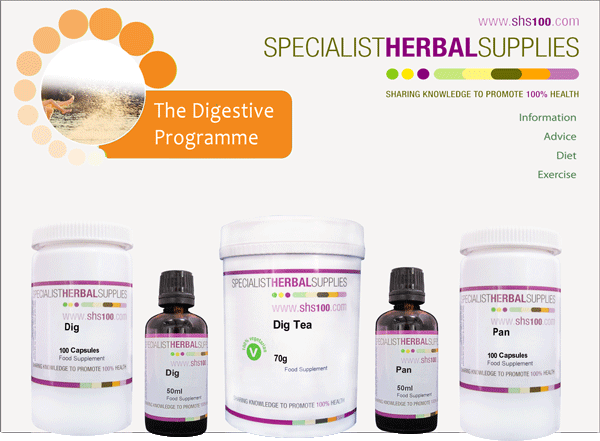
For maximal benefit for the digestion consider the Digestive Programme which includes Pan Capsules or Drops.




The pancreas is an incredible organ. It’s got a split personality! The first half of this is, it produces pancreatic enzymes. These allow us to digest our food so we can extract the goodness out of it.
The pancreas and digestion
The stomach starts the digestion process: but then the food passes into the first part of the small intestine, the duodenum, where the three enzymes the pancreas makes, break down fats into fatty acids, proteins into amino acids and starches into sugar. This all happens as the food passes slowly around the small intestine.
The pancreas and sugar regulation
The other half of the pancreas’ personality is the hormones it makes and deposits into the blood. These are mainly responsible for blood sugar levels.
The digestion passes sugar willy nilly into the blood stream; but the body can’t have this. Sugar has to be kept within certain limits or we’ll get the situation diabetics are faced with – we would get a “hypo” or a “hyper”. In other words, too little or too much for the body to cope with. In extremis, either pathway renders us unconscious.
The pancreas handles sugar balance by producing the right hormone for the situation of the blood sugar at any particular minute. If there is too much sugar in the blood – eg after a meal – the pancreas produces the hormone insulin which makes the cells absorb sugar – which they use for energy – to get it out of the blood.
When the sugar in the blood drops too low, the pancreas produces another hormone, glucagon, which signals the liver. The liver is a store of sugar in inert form. In times when we have too much, sugar is converted into glycogen and the liver stores it. The pancreas’ glucagon signals the liver to top up the blood sugar by converting some glycogen back to sugar.
In this way, the blood maintains the right level of sugar, and this process continues for us for 24 hours of every day.